



Top Pharma Products in India
PCD Pharma Franchise Companies in Bihar
October 22, 2026Top Pharma Products in India: A Complete Guide to Quality Pharmaceutical Products by Zenexa Healthcare
India’s pharmaceutical industry plays an important role in providing medicines, nutritional supplements, and other healthcare products to patients and healthcare professionals. The market includes products for nutritional support, digestive health, pain management, respiratory care, skin and scalp care, diabetes, and several other therapeutic areas.When researching the Top Pharma Products in India, it is important to look beyond brand names and promotional claims. Product composition, quality documentation, appropriate use, regulatory compliance, labeling, storage requirements, and professional medical guidance all contribute to informed healthcare decisions.
Zenexa Healthcare maintains an online pharmaceutical product portfolio featuring formulations across multiple healthcare categories. Its official website allows visitors to explore listed products and review available product-specific information.
This guide explains major pharmaceutical product categories, introduces selected products listed by Zenexa Healthcare, and outlines practical considerations for evaluating medicines and other healthcare formulations. The products featured are illustrative examples from the company’s catalogue, not a ranking of India’s best-selling, most prescribed, or most effective medicines.
Understanding Pharmaceutical Products in India
Pharmaceutical products include medicines and related formulations intended for specific therapeutic or supportive purposes. They may be available as tablets, capsules, oral liquids, injections, topical gels, shampoos, and other dosage forms.
The Indian pharmaceutical market includes several broad categories.
- Prescription medicines: Products that require a prescription under applicable regulations.
- Non-prescription medicines: Medicines that may be supplied without a prescription when permitted by applicable rules.
- Nutritional supplements: Products containing vitamins, minerals, or other nutrients that may support nutritional needs.
- Topical healthcare products: Gels, creams, soaps, shampoos, and other formulations applied to the skin or scalp.
- Specialty healthcare products: Formulations intended for specific therapeutic areas, depending on their verified composition and approved use.
These categories are not interchangeable. A nutritional supplement cannot automatically replace a prescribed medicine, and an online product listing does not establish that a product is suitable for every patient.
India regulates drugs through the Drugs and Cosmetics Act, 1940, associated rules, and other applicable requirements. The Central Drugs Standard Control Organisation (CDSCO) and state drug-control authorities have different responsibilities within the regulatory system.
Readers should verify the regulatory status and labeling of individual products rather than assuming that all products listed online have the same authorization or prescription requirements.
Top Pharma Products in India by Category
The following categories reflect examples in the Zenexa Healthcare product portfolio. They are intended to help readers understand the range of available formulations, not to establish a national pharmaceutical sales ranking.
1. Vitamins, Minerals, and Nutritional Supplements
Vitamins and minerals contribute to normal physiological functions. Supplementation may be appropriate when dietary intake is insufficient or a specific nutritional need has been identified.
The need for a supplement depends on factors such as age, diet, medical history, pregnancy status, laboratory findings, and existing treatment.
Selected products listed by Zenexa Healthcare include:
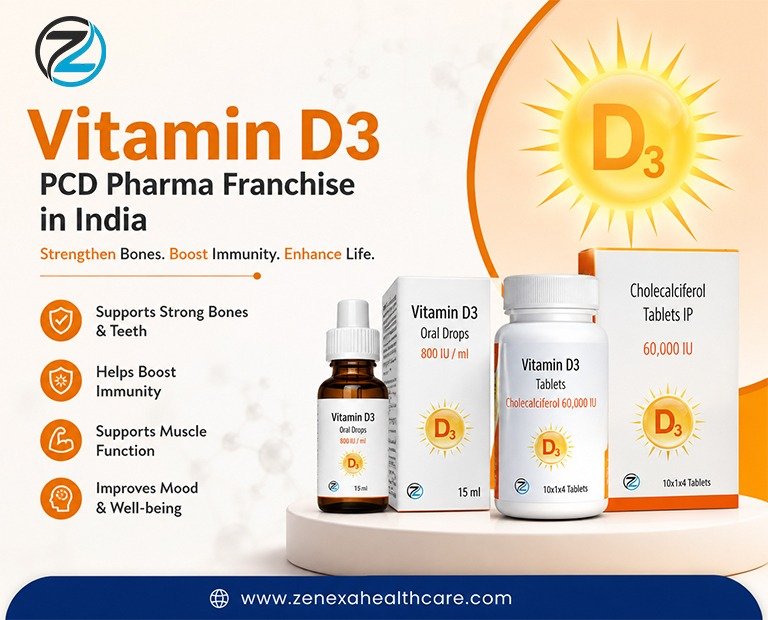
- Bonvia 60K — listed as cholecalciferol, or vitamin D3, 60,000 IU.
- Bonvia D3 Drop — listed as a vitamin D3 drop formulation.
- Vitafex — a product in the company’s nutritional healthcare portfolio.
- Vitafex C — another listed nutritional healthcare product.
- Nerovis Plus — listed as containing methylcobalamin, alpha-lipoic acid, folic acid, and pyridoxine.
- Lycoexa — listed as a lycopene, multivitamin, and multimineral formulation.
- Zemfar XT — listed as an iron, folic acid, and zinc formulation.
- Zen Omega Junior — a product listed in the company’s portfolio.
These products illustrate the variety of formulations in the nutritional healthcare category. Their ingredients, strengths, and intended uses should be confirmed against current labeling. Supplements should not replace a balanced diet or prescribed treatment.
2. Pain Relief and Musculoskeletal Healthcare
Pain-relief products may be formulated for oral or topical use. Their active ingredients, safety considerations, and appropriate applications can differ considerably.
Examples from the Zenexa Healthcare portfolio include:
- Diclobal Gel — a topical formulation listing diclofenac diethylamine, methyl salicylate, linseed oil, and menthol.
- Diclobal Roll-On — listed as a herbal pain-relief oil in roll-on packaging.
- Diclobal Oil — listed as a herbal pain-relief oil.
- Etorzen 90 — listed as etoricoxib 90 mg.
- Jointex GM — listed in the musculoskeletal product portfolio.
Topical and oral medicines are not interchangeable. Anti-inflammatory medicines can have important contraindications, adverse effects, and interactions. A qualified healthcare professional should assess which treatment, if any, is appropriate for the individual.
3. Gastrointestinal Healthcare Products
Gastrointestinal medicines include formulations used to manage certain acid-related digestive conditions and other gastrointestinal problems. Selection depends on the diagnosis, symptoms, medical history, and other medicines being taken.
Examples listed by Zenexa Healthcare include:
- Pantobio 40 — listed as pantoprazole 40 mg.
- Pantobio DSR — listed as a pantoprazole and sustained-release domperidone combination.
- Omezen 20 Cap — listed as omeprazole 20 mg.
- Fitrab DSR — listed as a rabeprazole and sustained-release domperidone combination.
- Livler — listed as an Ayurvedic liver tonic.
- Ascoen — another product in the company’s portfolio; its composition and category should be verified on the official page.
Pantoprazole and omeprazole belong to the proton pump inhibitor class, which reduces stomach acid production. Domperidone has separate safety considerations, including potential heart-rhythm risks. Combination medicines should be used only when clinically appropriate and under suitable medical supervision.
4. Cough, Cold, and Allergy Products
Cough, cold, and allergy products may contain antihistamines, expectorants, bronchodilators, or other active ingredients, depending on the formulation. The exact composition determines the product’s intended use and safety considerations.
Selected products include:
- Zenpar Cold — listed in the company’s cold-care range.
- V-Kuf LS — listed as a cough-care formulation containing levosalbutamol, ambroxol, and guaifenesin.
- V-Kuf Honey — listed as a honey-based Ayurvedic cough syrup.
- Fexoflip 120 — a listed product whose current composition should be verified.
- Bilaexa M — listed as bilastine 20 mg and montelukast 10 mg.
Respiratory symptoms can have different causes, and products marketed for similar symptoms may contain different ingredients. Some formulations may cause drowsiness or interact with other medicines. Avoid combining products without checking their ingredients and consulting an appropriate healthcare professional.
5. Antibiotics and Antibacterial Medicines
Antibiotics are used to treat certain bacterial infections. They do not treat viral infections such as the common cold, and inappropriate antibiotic use contributes to antimicrobial resistance.
Examples listed in the Zenexa Healthcare catalogue include:
- Clavoxa 625 — listed as amoxicillin 500 mg and clavulanic acid 125 mg.
- Cefurexa 500 — listed as cefuroxime axetil 500 mg.
These are examples of antibiotic formulations, not recommendations for treating a particular infection. The appropriate antibiotic depends on clinical assessment, the likely or confirmed organism, local resistance patterns, allergies, and patient-specific factors.
Antibiotics should be used under appropriate medical direction. Patients should not use leftover antibiotics, share prescriptions, or independently change a prescribed treatment plan.
6. Dermatology and Topical Care Products
Dermatological products include formulations intended for skin and scalp care. Their ingredients, indications, and directions vary.
Zenexa Healthcare lists products such as:
- Ketovex CT Shampoo — listed as ketoconazole 2% with coal tar.
- Ketovex Soap — listed as ketoconazole 2% with glycerin.
- Hairweb — listed as a nutritional formulation containing biotin and other nutrients.
The product’s current label should be checked before describing its ingredients or intended use. Persistent skin or scalp symptoms, or unexplained hair loss, may require assessment by a qualified healthcare professional.
7. Diabetes and Cardiovascular Medicines
Diabetes and cardiovascular medicines require careful selection because treatment can depend on blood glucose levels, blood pressure, kidney function, medical history, and other clinical factors.
Examples listed by Zenexa Healthcare include:
- Glylife M2 — listed as glimepiride 2 mg and sustained-release metformin 500 mg.
- Teliexa 40 — listed as telmisartan 40 mg.
- Sitahub DM 500 — a listed product whose complete composition should be confirmed on its official page.
Diabetes and cardiovascular medicines are not suitable for unsupervised experimentation. Changing or stopping treatment without medical advice can lead to complications or poor disease control.
Featured Pharmaceutical Products from Zenexa Healthcare
The following comparison table summarizes selected products and the composition information associated with their catalogue listings.
| Product | Category or published composition | Official product page |
| Bonvia 60K | Vitamin D3; cholecalciferol 60,000 IU | View product |
| Bonvia D3 Drop | Vitamin D3 drops | View product |
| Diclobal Gel | Topical formulation listing diclofenac diethylamine, methyl salicylate, linseed oil, and menthol | View product |
| Pantobio 40 | Pantoprazole 40 mg | View product |
| Pantobio DSR | Pantoprazole and sustained-release domperidone combination | View product |
| Omezen 20 Cap | Omeprazole 20 mg | View product |
| Clavoxa 625 | Amoxicillin 500 mg and clavulanic acid 125 mg | View product |
| Cefurexa 500 | Cefuroxime axetil 500 mg | View product |
| Glylife M2 | Glimepiride 2 mg and sustained-release metformin 500 mg | View product |
| Teliexa 40 | Telmisartan 40 mg | View product |
| Nerovis Plus | Listed combination of methylcobalamin, alpha-lipoic acid, folic acid, and pyridoxine | View product |
| Zemfar XT | Iron, folic acid, and zinc formulation | View product |
The composition information should be checked against current product packaging and labeling before publication. Inclusion in this table does not establish comparative superiority, current stock, or suitability for an individual patient.
For more formulations and product details, visit the official Zenexa Healthcare products page.
More Pharmaceutical Products Available from Zenexa Healthcare
The wider portfolio includes additional products that can help readers explore different pharmaceutical and healthcare categories.
1. Additional Nutritional Healthcare Products
- Vitafex — nutritional healthcare product.
- Vitafex C — listed in the nutritional range.
- Lycoexa — listed as a lycopene, multivitamin, and multimineral formulation.
- Zen Omega Junior — product listed in the company’s portfolio.
- Nerovis Plus — listed as a vitamin-related combination formulation.
- Zemfar XT — listed as an iron, folic acid, and zinc formulation.
The ingredients, strengths, and suitability of nutritional products should be assessed using current product labeling and professional guidance when appropriate.
2. Additional Gastrointestinal and Supportive Products
- Fitrab DSR — listed as a rabeprazole and sustained-release domperidone combination.
- Pantobio DSR — listed as a pantoprazole and sustained-release domperidone combination.
- Livler — listed as an Ayurvedic liver tonic.
- Ascoen — product listed in the portfolio; verify its composition and category.
Products with incomplete published details should be described only by name until their composition and intended category have been verified.
3. Additional Pain-Relief Products
- Diclobal Roll-On — listed as a herbal pain-relief oil in roll-on packaging.
- Diclobal Oil — listed as a herbal pain-relief oil.
- Etorzen 90 — listed as etoricoxib 90 mg.
- Jointex GM — listed in the musculoskeletal product range.
These products have different formulations and safety profiles. Product selection should be based on clinical needs rather than brand names alone.
4. Additional Respiratory and Allergy Products
- Zenpar Cold — listed in the cold-care category.
- V-Kuf LS — listed as a cough-care combination.
- V-Kuf Honey — listed as a honey-based Ayurvedic cough syrup.
- Fexoflip 120 — composition should be verified on the current product page.
- Bilaexa M — listed as bilastine 20 mg and montelukast 10 mg.
Always check the product label for age restrictions, contraindications, and other warnings before use.
5. Additional Dermatology and Hair-Care Products
- Ketovex CT Shampoo — listed as ketoconazole 2% with coal tar.
- Ketovex Soap — listed as ketoconazole 2% with glycerin.
- Hairweb — listed as a nutritional formulation containing biotin and other nutrients.
Verify current product information before making claims about specific skin, scalp, or hair conditions.
6. Additional Prescription Medicines
- Clavoxa 625 — listed as amoxicillin 500 mg with clavulanic acid 125 mg.
- Cefurexa 500 — listed as cefuroxime axetil 500 mg.
- Glylife M2 — listed as glimepiride 2 mg with sustained-release metformin 500 mg.
- Teliexa 40 — listed as telmisartan 40 mg.
- Sitahub DM 500 — confirm the complete composition on the official product page.
Antibiotics, diabetes medicines, and cardiovascular medicines require appropriate medical assessment and professional supervision. Their presence in a product catalogue is not a recommendation for self-medication.
How to Evaluate Pharmaceutical Products
When comparing pharmaceutical healthcare products, consider the following points:
- Regulatory compliance: Check the relevant product authorization and applicable manufacturing or marketing requirements. An online listing alone does not prove regulatory status.
- Quality assurance: Review available quality documentation and batch information. Ask the supplier or manufacturer for relevant details when needed.
- Verified composition: Read the active ingredients, strengths, dosage form, and product labeling. Never infer ingredients from the brand name.
- Packaging and expiry: Inspect the seal, batch number, manufacturing and expiry details, and signs of tampering.
- Storage requirements: Follow labeled temperature, moisture, and light-protection instructions.
- Genuine sourcing: Buy through reliable, authorized, traceable channels and retain purchase documentation.
- Prescription requirements: Confirm whether a medicine requires a prescription under applicable regulations.
- Responsible antibiotic use: Use antibiotics only when clinically indicated and prescribed appropriately.
These measures support informed decisions but cannot replace regulatory verification or professional assessment.
Why Choose a Reliable Pharmaceutical Company?
A reliable pharmaceutical company should provide clear product information, accurate labeling, appropriate quality documentation, traceable supply arrangements, and a way to address product-related enquiries.
For a pharmaceutical company in India, transparency is particularly important because different products can have different safety requirements. Clear composition information helps healthcare professionals distinguish formulations, while accurate labeling supports responsible dispensing and use.
Zenexa Healthcare’s online catalogue allows visitors to explore listed products and access individual product pages. Healthcare professionals, distributors, and other interested readers should verify current product status, documentation, storage requirements, and commercial arrangements directly with the company where necessary.
A company’s suitability should not be judged solely by promotional language. Relevant documentation, transparent product information, and appropriate quality evidence are more useful than unsupported claims of superiority.
How to Find the Right Pharmaceutical Product
The right pharmaceutical product is one that is appropriate for the patient’s clinical needs and can be used safely under suitable guidance. The most widely recognized brand is not necessarily appropriate for every person.
Follow these principles when researching a product:
- Identify the health concern. Symptoms do not always reveal their underlying cause. Persistent, severe, recurrent, or unexplained symptoms may require medical assessment.
- Review active ingredients. Compare actual composition and strength rather than relying on brand names or packaging.
- Consider patient-specific factors. Age, pregnancy, allergies, kidney or liver function, existing conditions, and other medicines can affect suitability.
- Check directions and warnings. Follow approved labeling and professional instructions. Do not guess doses or change prescribed schedules.
- Verify the source. Purchase through reliable channels and check that the packaging and labeling are intact.
- Consult a qualified professional. A doctor or pharmacist can help clarify prescription requirements, interactions, contraindications, and suitable alternatives.
Supplements should not replace a balanced diet or prescribed treatment. Similarly, stopping a long-term medicine or changing a dose without professional advice can be harmful.
Frequently Asked Questions
1. What are the top pharma products in India?
There is no single universal list of the top pharmaceutical products in India. The answer depends on whether the comparison considers sales, prescriptions, therapeutic importance, or another measure. The products in this guide are examples from Zenexa Healthcare’s portfolio, not a national ranking.
2. Which categories of pharmaceutical products are available in India?
India’s pharmaceutical market includes antibiotics, pain-relief medicines, gastrointestinal products, vitamins and minerals, respiratory and allergy products, dermatological formulations, diabetes medicines, cardiovascular medicines, and other categories. Availability and prescription requirements vary by product.
3. How can I find pharmaceutical products on Zenexa Healthcare?
Visit the official Zenexa Healthcare products page to browse the listed portfolio and follow links to individual product pages.
4. Where can I view the official product list of Zenexa Healthcare?
The main product catalogue is available at zenexahealthcare.com/products. Review individual product pages for published composition and other product-specific information.
5. How can I verify the composition of a pharmaceutical product?
Check the current product label and package insert, then compare them with official product information and relevant regulatory documentation. Ask a pharmacist or the manufacturer to clarify discrepancies. Never infer composition from a brand name.
6. What factors should be considered when choosing pharmaceutical products?
Consider clinical need, active ingredients, strength, dosage form, regulatory status, quality documentation, expiry date, storage requirements, potential interactions, contraindications, and professional advice.
7. Do all pharmaceutical products require a prescription?
No. Prescription requirements depend on the product and applicable regulations. Some medicines may be supplied without a prescription, while others require a prescription from an authorized professional. Confirm the requirements for the specific product.
8. Why is it important to buy medicines from reliable sources?
Reliable, authorized sources help reduce the risk of counterfeit, expired, improperly stored, or incorrectly labeled products. Check the packaging, batch information, and expiry date, and retain purchase documentation.
9. How can I check the quality and authenticity of medicines?
Inspect the packaging, seal, batch number, expiry date, and labeling. Buy from an authorized source and contact the manufacturer or appropriate regulatory authority if authenticity is in doubt. Packaging checks alone cannot conclusively establish product quality.
10. Where can I find official information about a specific Zenexa Healthcare product?
Use the Zenexa Healthcare product catalogue to locate the relevant product page. Confirm composition, directions, warnings, and current status against product labeling, and consult the company or a qualified pharmacist when information is incomplete.
Conclusion
Exploring the Top Pharma Products in India requires an understanding of pharmaceutical categories, verified compositions, regulatory requirements, and patient safety. Nutritional supplements, gastrointestinal medicines, pain-relief formulations, allergy products, antibiotics, dermatological products, and cardiometabolic medicines each have different purposes and precautions.
Zenexa Healthcare provides an online product portfolio through which readers can explore listed products, published compositions, and individual product information. These listings can help healthcare professionals, distributors, and other interested readers identify products for further verification, but they should not be interpreted as a national ranking or a recommendation for self-medication.
To learn more, explore the Zenexa Healthcare pharmaceutical product portfolio and review the relevant product pages. Verify current labeling and regulatory information, and consult a qualified healthcare professional before making treatment decisions.